Wind-Down Routine with Lavender and Cedarwood Oils
Build a calming evening wind-down routine with lavender and cedarwood oils: a simple diffuser schedule, steps and tips for a quieter end to your day.
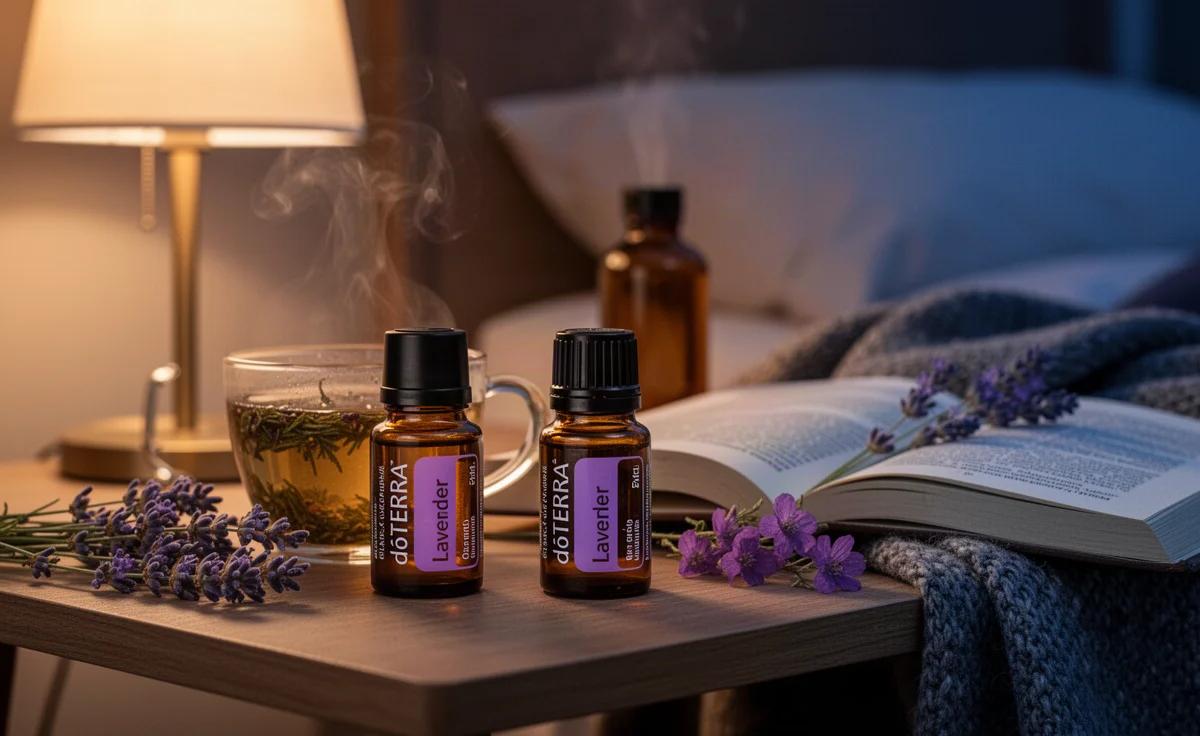
By the SleepResin Team — Evening rituals & doTERRA enthusiasts
It's 9:40 pm, the dishes are done, and your mind is still answering emails that nobody sent. Sound familiar?
A wind-down routine with lavender and cedarwood oils is a short, repeatable evening ritual that uses scent as a signal: the day is over. You diffuse a few drops in the bedroom about 30 minutes before bed, dim the lights, put the phone away and do something slow, like stretching, reading or a warm bath. Lavender brings a soft, floral, familiar note, while Cedarwood adds a warm, woody, grounding base. Together they create an atmosphere that many people associate with a quiet room and the end of the day. The magic isn't in the oil alone: it's in doing the same few things, in the same order, night after night.
Why Lavender and Cedarwood Work Well Together
Think of the two oils as a pair. Lavender is the gentle top note, the scent most of us link with calm evenings. Cedarwood is the steady base that makes the blend feel rounded and a little like a forest cabin. If you want to explore related oils, Roman Chamomile and Vetiver fit the same evening mood, and Bergamot adds a bright citrus lift for earlier in the evening.
In our experience, people who keep the blend the same every night get more out of it than people who switch oils constantly. Scent works partly through association, and association needs repetition. Research published through the National Institutes of Health library covers how people experience aroma and daily routines, but no oil is a shortcut. The ritual is the point.
Here is how some popular evening oils compare:
| Oil | Scent profile | Best used for |
|---|---|---|
| Lavender | Soft, floral, herbaceous | The signature calming note |
| Cedarwood | Warm, woody, grounding | A steady base for the blend |
| Vetiver | Deep, earthy, smoky | Slow, heavy-eyelid evenings |
| Roman Chamomile | Sweet, apple-like | A gentle, cozy finish |
| Bergamot | Bright, citrusy | Early evening transition |
Your Step-by-Step Evening Routine
You don't need an hour. Twenty to thirty minutes is plenty. Here is a simple order we recommend most often:
- Set a start time. Pick a consistent hour, about 45 minutes before you want to be asleep, and treat it like an appointment.
- Dim the lights. Switch off overhead lighting and use a lamp. Lower light tells the evening to slow down.
- Start the diffuser. Add 3 drops of lavender and 2 drops of cedarwood to about 100 ml of water in your diffuser. Run it for 30 minutes, then switch it off. Continuous diffusing dulls your sense of smell, so intervals work better.
- Put screens away. Charge your phone outside the bedroom if you can. Even 15 screen-free minutes helps.
- Do one slow thing. Stretch, journal two lines, read a paper book, or sip a warm herbal tea.
- Breathe slowly. Take five long breaths, in through the nose and out through the mouth, with the aroma around you.
- Lights out. Keep the room cool, dark and quiet.
If you'd like a deeper walkthrough of building the full ritual, our guide to a bedtime wind-down ritual with doTERRA essential oils covers it in detail.
Making It Stick: Placement, Timing and Variations
Place the diffuser on a stable surface across the room rather than right beside your pillow. A few feet of distance keeps the scent soft instead of overwhelming. Keep the room ventilated, and if you share the space with pets or little ones, check the product label and ask your vet or pediatrician first.
Some easy variations to keep the routine fresh without losing its structure:
- Bath night: Run the diffuser in the bathroom while you soak, then move it to the bedroom.
- Reading corner: Diffuse in your reading spot instead of the bedroom, then carry the calm with you.
- Busy-day reset: Swap in a drop of Bergamot at the start of the routine, then return to lavender and cedarwood.
- Weekend slow-down: Extend the routine to 45 minutes with a short walk and tea.
When you're ready to build a collection, a Lavender Touch roller is a handy pre-diluted option for a quiet moment, and Serenity is a blend many people love for the bedroom. You can compare it with the ideas in our bedroom diffuser ritual with Serenity and Cedarwood. If you're starting from scratch, a starter set like the Basic Kit or the Aroma Essentials Collection is a friendly place to begin.
A quick note on getting started: registration with doTERRA is free and takes about five minutes, and you can add any single product to your cart. Membership gives you the member price, 25% off the retail price, with a small annual fee that is waived on orders over 150 PV. A kit is a good-value option but never a requirement.
FAQ
How many drops of lavender and cedarwood should I diffuse? A good starting point is 3 drops of lavender and 2 drops of cedarwood per 100 ml of water, run for about 30 minutes. Start at the lower end and adjust to your own comfort. More drops don't make the room feel calmer, they just make the scent heavier.
When should I start the diffuser before bed? Start it about 30 minutes before you plan to lie down, and switch it off when you get into bed. This gives the aroma time to settle into the room so it's a gentle background by the time you're winding down.
Can I use these oils on my skin instead of diffusing? Yes, but always dilute first. For adults, 2-3% is typical, which is 2-3 drops per 5 ml of a carrier oil like fractionated coconut, and you should patch test in the crook of your elbow and wait 24 hours before first use. Pre-diluted roller blends are an easy alternative, and persistent sleep difficulties are best discussed with your doctor.
Conclusion
A calm evening isn't built from one perfect oil, it's built from small habits repeated until your body recognizes them. Lavender and cedarwood give that routine a warm, familiar scent to anchor it, and the steps above give it a shape you can keep.
This content is for general information only and is not medical advice. Essential oils are not intended to diagnose, treat, cure, or prevent any disease; consult a qualified healthcare professional before use.