Serenity Diffuser Blend for Evening Calm
Discover the doTERRA Serenity diffuser blend for a soothing evening wind-down. Simple blends, diffuser timing, and calm rituals to ease into rest.
By the SleepResin Team — Evening rituals & doTERRA enthusiasts
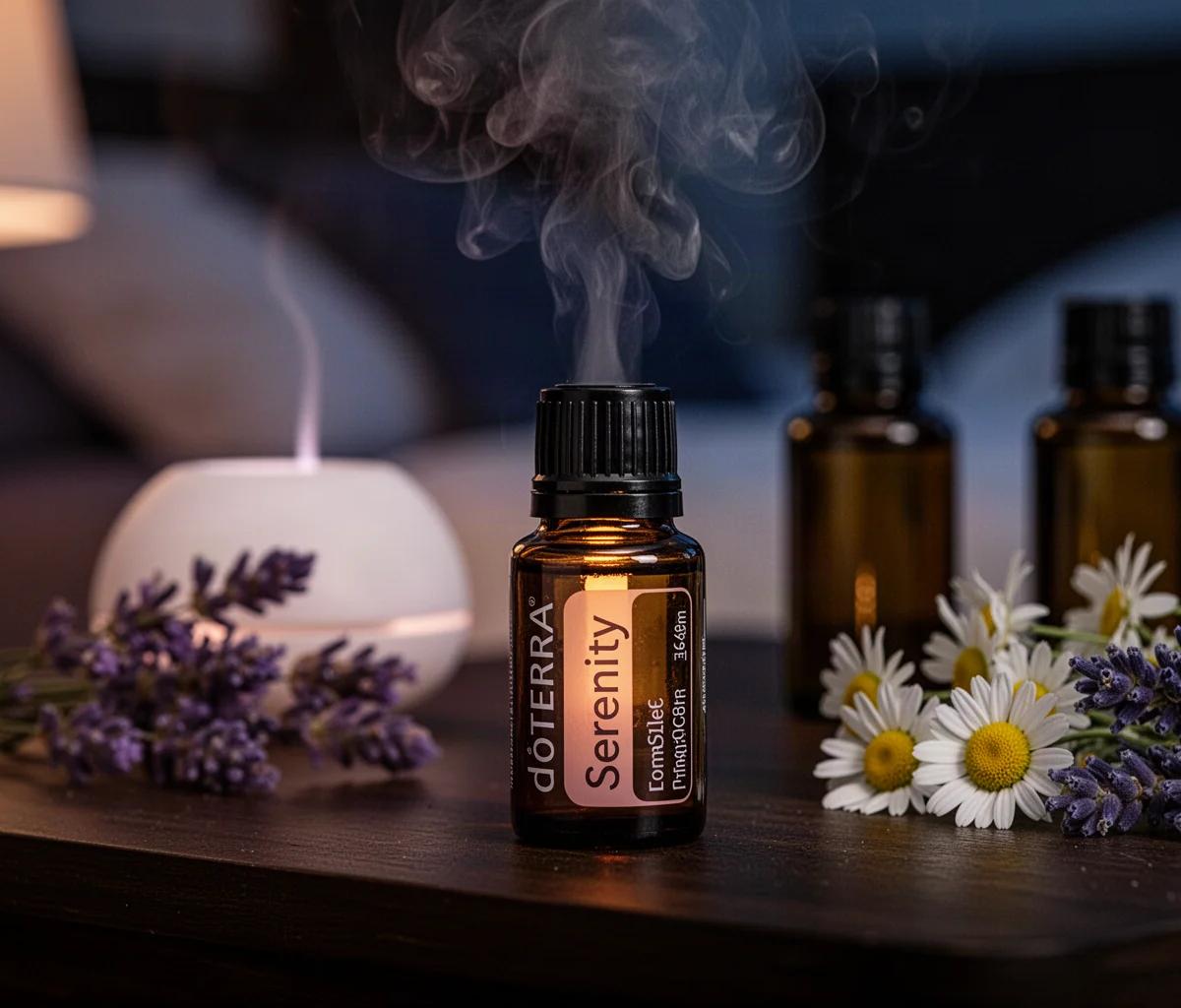
You close the bedroom door, the day's noise still humming in your chest, and you want the room to feel different. Softer. The direct answer: the doTERRA Serenity diffuser blend is one of the simplest ways to shift the evening atmosphere, pairing lavender, cedarwood, and sweet floral notes into a single calming scent profile built for your wind-down routine. It is not a sleep aid. It is an aromatic ritual: a few drops in a diffuser about 30 minutes before bed, while you wash up, read, or simply sit. In our experience, it works best as a cue, a signal to the mind that the working part of the day has ended. Below we cover simple blends, diffuser placement, and how to build a repeatable evening ritual around it.
Why Serenity Works for the Wind-Down
Serenity combines two oils that doTERRA customers often reach for on quiet nights. Lavender brings the classic floral softness most people associate with evening rituals. Cedarwood adds a warm, woody base that keeps the blend from feeling too sweet or sharp. Supporting notes from Roman Chamomile and Vetiver round it out with a grounded, unhurried character.
What we recommend most often is treating Serenity as the anchor of a repeatable eveningscape: same diffuser, same corner, same rough timing. The scent itself earns meaning through that repetition.
| Oil | Scent Character | Best Evening Role |
|---|---|---|
| Serenity | Floral, soft, slightly woody | Main diffuser anchor |
| Lavender | Classic floral, herbaceous | Standalone or paired with Serenity |
| Cedarwood | Warm, woody, grounding | Adds depth to blends |
| Vetiver | Earthy, deep, slow | A drop for quiet, heavy evenings |
| Balance | Spruce, frankincense, blue tansy | Centering before bedtime |
A Simple 3-Step Diffuser Ritual
- Set the stage first. Dim the lights, close the curtains, and clear the bedside table. The diffuser is only one part of the transition.
- Add 3 to 4 drops of Serenity. Use fewer drops for small rooms, more for open bedrooms. There is no medicinal dosage here, just personal preference for aroma strength.
- Run the diffuser before bed, not only while you sleep. We typically start it 30 to 45 minutes before lying down, letting the scent settle into the room rather than arriving all at once.
If you want a lighter, more floral evening, swap one drop of Serenity for one drop of Lavender Touch, which comes pre-diluted and is easier to apply to wrists or temples as part of the same ritual. For evenings when the mind feels busy, one drop of Adaptiv blended with two drops of Serenity creates a softer, slightly fresher room scent that still stays firmly on the calming side.
Building the Bedroom Atmosphere
The diffuser works best when it feels like part of a larger evening pattern. We like to think of it as one instrument in a small ensemble: a warm shower, a few pages of a book, a cool room, and one consistent scent. Balance is a good alternative on nights when Serenity feels too floral. It leans more toward spruce and frankincense, with a steadier, less sweet aroma. Bergamot is another option for a brighter, citrus-tinged wind-down that still avoids the sharpness of a morning citrus like lemon.
Placement matters more than most people expect. Put the diffuser at least two feet from the head of the bed and slightly below head level. The scent should drift, not pour. In a larger bedroom, one diffuser near the doorway and another on the nightstand can work, but we typically suggest starting with one, placed close to where you actually spend the last 30 minutes of the evening. The goal is a subtle presence, not a saturated room.
The Serenity softgels are a separate internal format some customers pair with the diffuser, but we treat them as a personal supplement decision, not a required part of the ritual. The aromatic path is often enough.
Research on lavender and sleep environment is not scarce. The National Institutes of Health has covered the general relationship between calming scents and relaxation in several contexts, though the evidence rarely supports specific clinical claims. For us, the practical case is simpler: a consistent scent, a dim room, and a slower set of actions before bed tend to create the conditions where rest feels easier to approach.
Related reading
- Serenity Oil Bedtime Ritual Diffuser Blend
- Serenity Diffuser Blend for a Calm Bedroom
- Using doTERRA Serenity for a Calm Evening
FAQ
How many drops of Serenity should I use in my diffuser?
Three to four drops is a common starting point for a standard bedroom. Large or open rooms may handle four to five drops, while small, enclosed spaces often need only two or three. Adjust to your own nose.
Can I blend Serenity with other oils?
Yes. A drop of Adaptiv adds freshness without losing the calm base, while Vetiver deepens the aroma on evenings that feel heavy or restless. Lavender alone is also a clean, simple alternative if you want to isolate the floral layer.
When should I start diffusing before bed?
About 30 to 45 minutes before you intend to lie down. This lets the aroma settle into the room gradually, creating a transition rather than arriving all at once when you are already in bed.
Is the Serenity diffuser blend a substitute for medical treatment?
No. It is an aromatic product used for a calming evening atmosphere. Persistent sleep difficulties or ongoing feelings of worry should be discussed with a qualified healthcare professional.
If you want a deeper look at how this blend folds into a full evening routine, our doTERRA Serenity diffuser blend evening wind down guide walks through the complete setup, from diffuser choices to room temperature.
A quiet bedroom rarely happens by accident. It is built, one small choice at a time, and a consistent diffuser blend is one of the gentler choices you can make.
This content is for general information only and is not medical advice. Essential oils are not intended to diagnose, treat, cure, or prevent any disease; consult a qualified healthcare professional before use.
Explore doTERRA essential oils