doTERRA Serenity vs Adaptiv for Evening Calm
Wondering which doTERRA oil suits your wind-down? We compare Serenity and Adaptiv for evening calm, diffuser blends, and everyday rituals.
By the SleepResin Team, Evening rituals & doTERRA enthusiasts
Maybe you have stood in front of your oil shelf at 9 p.m., two bottles in hand, unsure which one fits the evening ahead. The short answer: Serenity leans floral, soft, and anchored in lavender and warm woods, a classic before-bed scent. Adaptiv leans brighter, fresher, with citrus and mint, and fits the early evening when the day's noise is still lingering. Both support a calmer end to the day. What changes is the atmosphere each one creates. Serenity feels like dimmed lamps, linen sheets, and slow tea. Adaptiv feels like opening a window, loosening your shoulders, and taking a deep breath before dinner. If your goal is a purely bedtime ritual, Serenity is usually our first suggestion. If you need help shifting gears from a busy afternoon to a quiet evening, Adaptiv earns its place. Many homes end up with both, used at different hours.
The Atmosphere Each Oil Creates
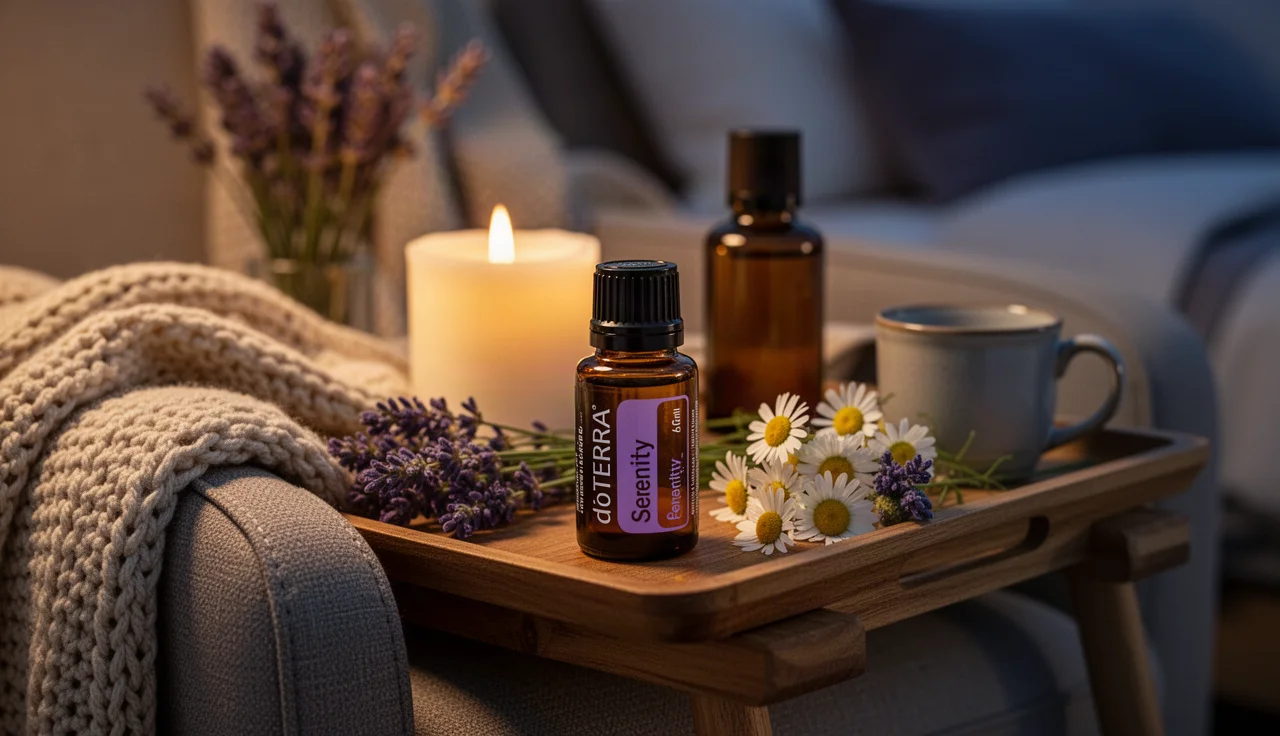
Scent shapes a room faster than lighting does. Serenity combines lavender, cedarwood, vetiver, and sweet marjoram. The result is pillowy and grounding, a scent that seems to lower the volume of the evening. We often recommend it for the last 30 to 45 minutes before bed, diffused at 3 to 5 drops per 100 ml of water in a ventilated room, then switched off before sleep. The repetition matters more than the amount: same scent, same hour, same sequence. That association is what makes it feel like bedtime.
Adaptiv blends wild orange, lavender, copaiba, spearmint, and rosemary. It is lighter, brighter, and slightly minty. It suits the transitional window of the early evening, when the mind is still replaying the day. Diffuse it while preparing dinner, tidying up, or sitting with a book. It does not push you toward sleep. It clears the air and helps the day feel finished. For a gentler carry-around option, Adaptiv Touch is pre-diluted for simple roll-on use.
The Ritual Shapes the Calm
The oil is only one part of the evening. We recommend building a repeatable wind-down that works with your chosen scent, not against it.
- An hour before bed, lower the lights and move screens out of reach.
- Choose the oil based on the hour: Adaptiv in the early evening, Serenity closer to sleep.
- Add 3 to 5 drops to a diffuser with 100 ml of water and run it for 30 to 45 minutes, never continuously.
- While it diffuses, do one quiet thing: stretch, sip tea, write tomorrow's list.
- Switch the diffuser off before you get into bed so the air settles.
| Feature | Serenity | Adaptiv |
|---|---|---|
| Character | Floral, soft, grounding | Bright, fresh, slightly minty |
| Key notes | Lavender, cedarwood, vetiver | Wild orange, copaiba, spearmint |
| Best moment | Last 30-45 minutes before bed | Early evening, after a full day |
| Feels like | Dimmed lamps, warm linen | An open window, a deep breath |
| Carry option | Serenity oil or pre-diluted roll-on | Adaptiv oil or Adaptiv Touch |
| Bedroom style | Classic, quiet, slow | Light, airy, transition-focused |
For a more structured evening, our full guide on a calming bedtime ritual with doTERRA Serenity and Adaptiv walks through the whole sequence, from first diffuser switch to lights out.
Blending, Layering, and Alternatives
You do not have to pick a side. Some evenings call for both. Try 2 drops of Adaptiv and 2 drops of Serenity per 100 ml of water in the early evening, then shift to Serenity alone in the final stretch. The minty brightness fades into floral softness as the night deepens. If you want the same shift without a second diffuser session, apply Adaptiv Touch to the wrists after dinner and diffuse Serenity before bed.
Other oils can fill similar roles. Lavender is the honest single-note alternative to Serenity, sweet and familiar. Roman Chamomile is even softer, a good choice for anyone who finds lavender too present. Bergamot offers a calm citrus note for early evening, though pressed bergamot can make skin sun-sensitive, so keep it for the diffuser. Vetiver and Cedarwood are base notes that anchor a blend and pair well with either hero oil. Finally, Balance lives between the two: woodsy and soft, useful after a day that felt wobbly. In our experience, a small collection of two or three of these covers most evenings without overcomplicating the ritual.
Try one quiet experiment. Diffuse Serenity on a slow Sunday evening, then Adaptiv on a busy Tuesday. Notice which one matches the room you actually have, not the room you wish you had.
See Serenity in the doTERRA shop
FAQ
Can I use Serenity and Adaptiv together in one diffuser?
Yes. A common combination is 2 drops of each per 100 ml of water, especially in the early evening when Adaptiv's freshness is still welcome and Serenity begins to soften the room. Switch to Serenity alone for the final stretch before bed.
Which one is better for a truly quiet, slow evening?
Serenity is usually the better match for a low, slow, pre-sleep atmosphere. Its floral, woody profile feels naturally tied to dim light and stillness, whereas Adaptiv carries a brighter, more alert quality.
Do I need a kit to try both Serenity and Adaptiv?
No. You can register free with doTERRA and add any single product to your cart, with no kit and no obligation. A kit is simply an optional way to start, often offering good value, while membership gives access to the 25% off member price.
Is Adaptiv only for daytime?
No, but it shines in the early evening when the day is still present. Many people diffuse Adaptiv while making dinner or resetting the room, then move to Serenity closer to bedtime.
What if lavender is too strong for me?
Try Roman Chamomile or Cedarwood instead. Both offer a softer, earthier calm without lavender's prominent floral note.
Serenity and Adaptiv are not competitors. They are two rooms in the same evening. Pick the one that matches the hour, repeat it until the ritual feels automatic, and let the scent do its quiet work. Persistent sleep difficulties deserve a conversation with a doctor, not a diffuser alone.
This content is for general information only and is not medical advice. Essential oils are not intended to diagnose, treat, cure, or prevent any disease; consult a qualified healthcare professional before use.