Calming Evening Ritual with Serenity and Adaptiv
Build a repeatable wind-down ritual with doTERRA Serenity and Adaptiv. Diffuser blends, timing, dilution tips, and which oils pair best for calm evenings.
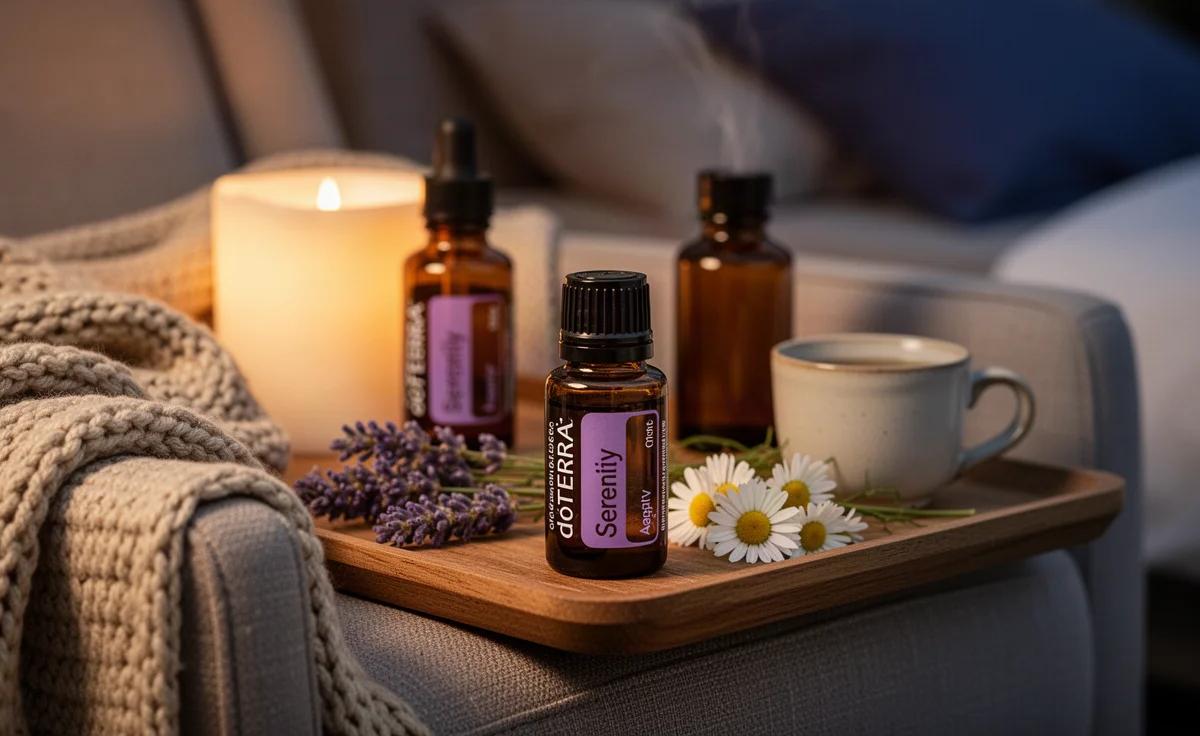
By the SleepResin Team — Evening rituals & doTERRA enthusiasts
You know that moment when the day's to-do list keeps replaying in your head, long after the kitchen is clean and the lights are low. A calming evening ritual starts with a simple question: what if the last hour before bed felt as soft as the blanket you wrap yourself in?
The direct answer is that a repeatable wind-down ritual, built around scent, light, and timing, gives your body and mind a consistent cue that the day is ending. Two doTERRA blends work beautifully together for this purpose: Serenity, with its soft lavender and vanilla heart, and Adaptiv, with its bright, balancing citrus and mint notes. One anchors the evening, the other helps release the static of the day. Together they create a ritual that feels less like a product and more like a nightly exhale.
Why Two Blends Instead of One
We often recommend pairing these two because they handle different sides of an evening. Serenity leans floral, warm, and enveloping, often used in the bedroom. Adaptiv is fresher and more stimulating to the senses, better suited for that transitional window between dinner and bed, when you are still winding down but not yet ready to dim everything.
| Feature | Serenity | Adaptiv |
|---|---|---|
| Aroma profile | Floral, soft, vanillic | Citrus, minty, lightly herbal |
| Best timing | 30-45 minutes before bed | Early evening, after dinner |
| Common placement | Bedroom diffuser | Living room or bath |
| Pairs well with | Cedarwood, Roman Chamomile | Bergamot, Petitgrain |
| Role in ritual | Anchor and settle | Release and reset |
In our experience, using Adaptiv first and Serenity second creates a natural arc: clear the mental residue, then settle into rest.
A Step-by-Step Evening Ritual
Here is the exact sequence we share with readers who want something simple, repeatable, and genuinely calming.
- Dim the lights at the same time each night. Choose one lamp, one soft source. Low, warm light tells the room it is time to slow down.
- Diffuse Adaptiv in the living space for 30 minutes while you tidy, read, or sit quietly. Use 3-5 drops per 100 ml of water, in a ventilated room.
- Move toward the bedroom and switch blends. Turn off the living area diffuser. In the bedroom, add 3-5 drops of Serenity per 100 ml of water and run it for 30-45 minutes before sleep.
- Add a skin step, if you like. Dilute Lavender or Roman Chamomile at 2-3% (2-3 drops per 5 ml of jojoba or fractionated coconut oil) and massage into wrists or the back of the neck. Do this at least 12 hours before sun exposure if using any cold-pressed citrus oil.
- Keep the last 20 minutes screen-free. The oil does its best work in a context that invites rest: cooler room, soft textures, slow breathing.
For an even deeper bedtime-focused version, see our separate guide on a calming bedtime ritual with Serenity and Adaptiv.
Choosing Supporting Oils for Your Ritual
You do not need a large collection to build this ritual. But a few well-chosen oils can deepen it.
- For a woodier, more grounded evening: Cedarwood blends with Serenity to add a tree-like stillness.
- For a softer citrus note without the brightness: Bergamot, especially the FCF version if applying to skin, brings a gentle, non-stimulating lift.
- For a delicaate floral alternative: Petitgrain offers a green, calm note that pairs well with Adaptiv.
- For a mineral, anchoored note: Vetiver is one of the most grounding base notes, though a little goes far.
- For a balancing touch before bed: Balance shares woody, resinous notes that bridge the two main blends nicely.
If you prefer skin application over diffusion, the touch versions are convenient: Serenity Touch and Adaptiv Touch come pre-diluted for one-step application.
Timing, Dilution, and a Few Practical Notes
Diffusion works best at 3-5 drops per 100 ml of water, in 30-45 minute intervals, in a ventilated room. Continuous diffusion saturates the nose and adds little. For skin use, always use a measured dilution: 1% (about 1 drop per 5 ml of carrier) for sensitive skin, face, or children over 2; 2-3% (2-3 drops per 5 ml) for adult body use. Jojoba is ideal for the face, fractionated coconut oil for body massage, and sweet almond oil for drier skin.
Store oils in dark glass, away from heat and light. Citrus oils oxidize faster, typically within 6-12 months, while resins and woods last for years.
FAQ
Can I diffuse Serenity and Adaptiv together in the same diffuser?
Yes, though we usually suggest sequencing them rather than blending heavily. Start with 2 drops of Adaptiv and 3 drops of Serenity per 100 ml of water if you want a single diffusion session that bridges mood and rest.
How long before bed should I start the ritual?
About 60-90 minutes is ideal: use Adaptiv in the earlier part of that window, then switch to Serenity in the bedroom for the final 30-45 minutes before lights out.
Do I need a kit to start using these oils?
No. Any doTERRA product can be purchased individually with a free membership account. Enrollment kits are an optional way to try multiple oils at the member price, typically 25% off retail, but they are never required.
Are these blends safe for children?
For children over 2, keep diffusion to 3 drops per 100 ml, limit sessions to 30 minutes, and ventilate the room. Under 2, do not diffuse with the child in the room. For skin application, use the 1% dilution and patch test first.
What if I find Serenity too floral?
Try Vetiver or Cedarwood instead. Both offer a woodier, less floral evening profile. Roman Chamomile is another soft alternative for those who find lavender-based blends overwhelming.
A calming evening ritual is not about perfection. It is about the same scent, the same hour, the same sequence. That repetition, more than any single drop, teaches the body that rest is near. Serenity and Adaptiv simply make the lesson easier to return to. Research on the role of conditioned relaxation cues in sleep hygiene remains an active area of study at the National Institutes of Health. If sleep problems persist, speak with a doctor or qualified health professional.
This content is for general information only and is not medical advice. Essential oils are not intended to diagnose, treat, cure, or prevent any disease; consult a qualified healthcare professional before use.
Explore doTERRA essential oils