Calming Essential Oils for Bedtime Routine
Discover the best calming essential oils for a restful bedtime routine. Simple blends, diffuser timing, and evening rituals for deeper calm.
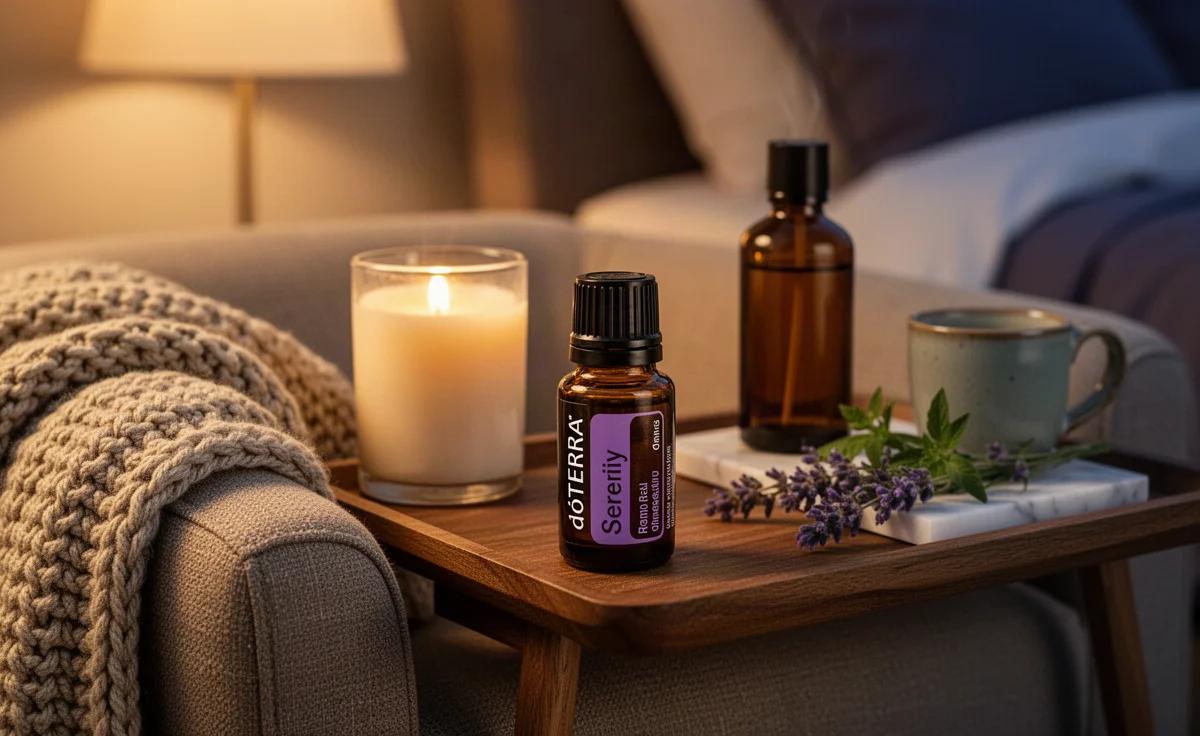
By the SleepResin Team — Evening rituals & doTERRA enthusiasts
You know that moment when you finally sit down after a long day, but your mind is still racing through tomorrow's to-do list? That is exactly where a calming bedtime routine with essential oils can help.
The direct answer: a small set of grounding oils, like Serenity, Lavender, and Vetiver, combined with a simple, repeatable wind-down ritual, creates an atmosphere that supports quality rest. The goal is never a single drop that "fixes" anything. It is the repetition: same scent, same time, same sequence. Your mind learns that this aroma means the day is ending. Below, we will walk through which oils suit the evening, how to diffuse them properly, and how to build a ritual that actually sticks.
The Best Calming Oils for Evening
Not every relaxing oil works for everyone. In our experience, the best approach is to start with one or two and notice how they feel in your space.
| Oil | Aroma Profile | Best For |
|---|---|---|
| Lavender | Soft, floral, sweet | Classic evening calm |
| Roman Chamomile | Delicate, apple-like | Those who find lavender too strong |
| Vetiver | Deep, earthy, smoky | Feeling anchored and grounded |
| Cedarwood | Warm, woody | Slow, heavy evenings |
| Bergamot | Citrusy, bright but soft | Light calm without stimulation |
| Serenity | Soft blend of florals and woods | Ready-made evening blend |
Serenity is what we recommend most often for beginners because the blend is already balanced. For something a touch more uplifting, Peace Touch comes pre-diluted and rolls on easily at the wrists before bed.
How to Build a Simple Wind-Down Ritual
The value sits in repetition, not complexity. Here is a sequence we have found practical:
- Set the light low. Warm lamps only. This signals the shift from day to evening.
- Start the diffuser 30 to 45 minutes before bed. Use 3 to 5 drops total per 100 ml of water. Run it on an interval setting, not continuously.
- Choose one scent and keep it consistent. Your brain associates that aroma with rest over time.
- Add a slow, simple habit. A few pages of a book, a warm cup of tea, or slow breathing for two minutes.
- Turn the diffuser off when you get into bed. Saturated air does not help sleep.
If you want more blend ideas, our guide to bedtime diffuser blends for calm evenings walks through several combinations.
Practical Tips for Better Evening Diffusion
Dilution matters for skin use. If you apply an oil topically, use 1% dilution for sensitive skin: about 1 drop of essential oil per 5 ml of carrier oil. For general body use in adults, 2 to 3% is appropriate: 2 to 3 drops per 5 ml. Jojoba works well on the face, while fractionated coconut oil is lighter for the body.
Diffusion timing matters more than quantity. A few drops in a well-ventilated room for a short window creates a more pleasant atmosphere than an all-night, heavy mist. Research published in PubMed suggests olfactory adaptation happens within minutes, so a fresh, short session before bed is more effective than constant diffusion.
Check citrus oils for photosensitivity. Cold-pressed bergamot can irritate skin exposed to sun. If you apply it topically, wait about 12 hours before sun exposure or choose an FCF version.
For an even deeper wind-down, some people pair their diffuser with Adaptiv Touch, a pre-diluted roll-on blend designed for moments when everyday tension feels loud. Balance offers a warm, woody alternative that pairs beautifully with cedarwood in the diffuser.
Common Mistakes That Quietly Sabotage the Ritual
A well-intentioned routine can still fall flat because of small, easily fixed errors. One mistake we see often is rotating four or five different oils every night while trying to find the “perfect” scent. The brain cannot build a strong sleep association when the aroma keeps changing. Pick one blend or single oil and use it for at least three weeks before deciding it does not work.
Another common issue is diffusing in a room that is still cluttered or visually busy. Essential oils work alongside environmental cues, not against them. If the bedroom still has laundry piles, work papers, or bright overhead lighting, the aroma alone cannot override that signal. Spend five minutes tidying before the diffuser starts. The combination of a clear space and a consistent scent is far more powerful than doubling the drops in the water.
Also watch the diffuser placement. Placing it directly beside your pillow or on a nightstand at head height can create an overwhelming, sharp aroma that feels more distracting than calming. A spot across the room, at least three feet from the bed, lets the scent diffuse gently into the air.
A 10-Minute Evening Reset for High-Energy Evenings
Some nights feel frantic until the moment your head hits the pillow. For those evenings, a shortened version of the ritual can still work if you keep the sequence intact: light, scent, breath, bed.
Start by dimming one small lamp while the diffuser runs on its own. Then sit on the edge of the bed, feet flat on the floor, and inhale slowly for a count of four, hold for four, and exhale for four. Repeat six times. If your mind wanders to tomorrow, that is normal — just return to counting.
If you prefer a tactile option, keep a pre-diluted roll-on like Peace Touch in the nightstand drawer rather than the bathroom. Rolling it onto the wrists and taking three slow breaths right there builds a bridge between the scent and the physical act of getting into bed. This matters because the ritual should meet you where you are, not require a perfectly calm evening to begin.
FAQ
Which essential oil is best for bedtime?
Lavender is the classic starting point for most people. If you want a ready-made blend, Serenity combines florals and woods specifically with evening calm in mind.
How long should I diffuse oils before bed?
Run the diffuser for 30 to 45 minutes before you get into bed, then turn it off. This gives the aroma time to fill the room without oversaturating the air while you sleep.
Can I apply essential oils directly to my skin?
Always dilute. Use 1% for sensitive skin, 2 to 3% for adult body application. A pre-diluted option like Peace Touch removes the measuring step entirely.
What if I have persistent trouble sleeping?
If sleep problems continue night after night, speak with a doctor. Essential oils support a calming atmosphere and evening ritual, but they are not a substitute for medical advice or care.
A calm evening does not require a long routine. One scent, one soft light, one slow breath. That is enough to begin.
This content is for general information only and is not medical advice. Essential oils are not intended to diagnose, treat, cure, or prevent any disease; consult a qualified healthcare professional before use.